Wednesday, March 14, 2012

Creative Process Journal: The Cabinet of Curiosities for Fashion

The Cabinet of Curiosities at the Alexander McQueen: Savage Beauty Exhibition at the Met
(Photo by Ingrid Mida 2011)
Most museums today offer an aesthetic of pristine perfection. This connoisseurship bias rejects anything showing signs of use (the sweat or stains of life on a dress for example) or items that are broken or damaged. Order, perfection and education seem to be the guiding principles of museum presentations today, leaving little room for imagination and wonder.

This is quite unlike the idea of the Wunderkammer or Cabinet of Curiosities that were popular in the 15th to 19th centuries (see my previous post). These rooms or cabinets were packed full of objects meant to inspire delight and wonder at the juxtaposition of rare and unusual objects. The aesthetic of dense accumulation of objects is rarely seen anymore although I can think of one museum where it still exists (The Redpath Museum on the campus of McGill University in Montreal).


Monday, March 12, 2012

Creative Process Journal: Doll Houses and Wunderkammer

The Doll's House of Peronella Oortman c. 1686-1710
Inspiration for Viktor and Rolf's doll house
Another interesting aspect of the Viktor and Rolf 2008 retrospective at the Barbican Gallery was a 6-metre high doll's house which could be viewed from three different levels of the gallery. The giant Viktor and Rolf doll house references the seventeenth century cabinet houses or doll's houses from the collection of  the Rijksmuseum in Amsterdam, where Viktor and Rolf live and work. Designed by Siebe Tettero, the Viktor and Rolf dollhouse, was three storeys, with each room containing one or more dolls dressed in a Viktor and Rolf creation.


Saturday, March 10, 2012

Creative Process Journal: Les Jeux de la Poupee (The Doll's Games)

Les jeux de la poupee by Hans Bellmer 1949  
Hans Bellmer (1902-1975) was a German artist, who used self-crafted life sized dolls assembled from a range of materials in photographs which explored erotic themes. He hand-coloured the images and published ten of them in a book in 1934. Bellmer made a second doll in 1935 using the head and hands from the first doll and also incorporating a number of ball and socket joints which allowed the doll to be manipulated into a variety of contortions. The doll had interchangeable limbs and other parts, as well as an extensive wardrobe. He photographed this work in 1935 but it was not published until 1949, in part because his work was considered 'Degenerate' by the Nazis (Wood 316). Bellmer's is associated with the Surrealist movement, and after moving to Paris in 1938, he spent some time in an interment camp in the south of France alongside Max Ernst.


Thursday, March 8, 2012

Creative Process Journal: Barbie

Barbie
In 1959, when the Barbie doll was first introduced onto the market by Ruth Handler, more than 350,000 units were sold and since then an estimated that over 1 billion dolls have been sold. She has survived a range of assaults, including the firing of Ruth Handler from the company in 1971 and backlash from feminists and women's rights advocates. Robin Swicord, an author and screenwriter, said "In countries where they don’t even sell makeup or have anything like our dating rituals, they play with Barbie. Barbie embodies not a cultural view of femininity, but the essence of woman” (qtd. in Lord 80). 


Barbie was a respectable version of the Lilli doll in Germany. Lilli was "a German doxie - an ice-blond, pixie-nosed specimen of an Aryan ideal" that was popular among German men who often placed her on the dashboards of their car or gave the doll as a gift to their girlfriends (Lord 8). Handler recast Lilli as a wholesome all-American girl and marketed the doll to young girls. The rest is the stuff of marketing legend.


Wednesday, March 7, 2012

Creative Process Journal: The Doll in my Studio

Her Face, Photo by Ingrid Mida 2012
I have a doll in my studio -- a Santos Cage Doll that I purchased a number of years ago in a vintage furniture shop. I didn't even know what kind of doll she was when I acquired her, and only learned later that these types of dolls were used as a form of altar for homes in Spain and Mexico. She has sat unadorned, until now. All this research into dolls has led me to want to do something with her, so I've begun to make her a skirt out of mesh. In the photo you can see the basque for the skirt around her hips. This isn't intended to be the final product of my research, but just one path in my creative exploration.

Santos Cage Doll in Studio, Photo by Ingrid Mida 2012

Notice of copyright: 
All text and images on this blog are the copyright of Ingrid Mida, unless otherwise noted. The copying of posts, images and/or text without proper attribution is violation of copyright and legal action will be pursued.


Tuesday, March 6, 2012

Creative Process Journal: Fashion Dolls

Jointed wooden doll, 17th-18th century
In the seventeenth and eighteenth centuries, fashion dolls were used by dressmakers as a way of illustrating the latest styles to their potential clients. Dolls dressed in the latest Parisian styles were on display in fashionable shops and also were sent regularly to London and to the courts of Europe. The dolls were considered precious and sometimes even had diplomatic immunity during times of war. Although the most fashionable dolls originated from Paris, dolls were also made up in England and sent to the American colonies, where England was the dominant cultural influence.


Sunday, March 4, 2012

Creative Process Journal: Freud and The Uncanny

In 1919, Sigmund Freud wrote an essay called The Uncanny in which he described the intense feeling of strangeness that can occur when encountering something that is both familiar and unfamiliar at the same time, causing doubt as to whether or not the object is, in fact, alive. The essay begins with a semantic analysis of the origins of the German word for uncanny, which is unheimlich and its opposite, heimlich which means homely. He ties the notion of uncanny to something that is familiar but strangely unsettling, such as dolls, doubles and waxwork figures. 


Wax-head doll. English c.1882
Freud also analyzed the idea of the double in his essay, drawing on the writings of Otto Rank who linked the double to “mirror-images, shadows, guardian spirits, the doctrine of the soul and the fear of death”. Doubles were used in ancient civilizations, where artists formed images of the dead as “assurance of immortality” and an “energetic denial of the power of death”.  Freud suggested that the double “having once been an assurance of immortality”, could also be an “uncanny harbinger of death.” (Freud 142). He also describes the fantasy of being mistakenly buried alive as "the most uncanny thing of all". 


Friday, March 2, 2012

Creative Process Journal: The Viktor & Rolf Dolls

Viktor & Rolf doll for 2008 retrospective
The dolls used in the Viktor and Rolf retrospective at the Barbican Gallery in 2008 were based on a nineteenth-century bebe type doll intended as a plaything and produced by the Maison Jurneau in Paris. A Belgian doll maker used real human hair, bisque porcelain faces and paper-mache bodies for the Viktor and Rolf dolls.

Bedtime Story Autumn/Winter 2005-6 Viktor & Rolf
There were two sizes of dolls used in the exhibition at the Barbican: 70 cm tall dolls dressed in miniature versions of the designer's collections and life-size dolls dressed in the actual garments. The shift in scale created an Alice in Wonderland illusion and it was somewhat surreal.

Cover of the exhibition catalogue
The cold perfection and the haunting gaze of the Viktor and Rolf dolls at the Barbicon – both large and small – depicted what Freud has defined as uncanny (and which will be the subject of an upcoming post). Caroline Evans referenced Freud’s essay in the exhibition catalogue and she also pointed out that “the double poses a challenge to the idea of individuality and the doll straddles an uncomfortable boundary between the living and the dead.” (Evans 19).

References:

Evans, Caroline and Frankel, Susannah. The House of Viktor and Rolf. London: Merrell. 2008.
Freud, Sigmund. The Uncanny. London: Penguin Books, 2005

Notice of copyright: 
All text and images on this blog are the copyright of Ingrid Mida, unless otherwise noted. The copying of posts, images and/or text without proper attribution is violation of copyright and legal action will be pursued.

Wednesday, February 29, 2012

Creative Process Journal: The Uncanny

Viktor and Rolf L'Hiver de L'Amour 1994
This post marks the beginning of a new creative project - that I've tentatively titled The Uncanny. The spark of inspiration for this project comes from a passage I read in the book Adorned in Dreams where fashion scholar Elizabeth Wilson considers the unsettling feelings created by the haunting spectre of costumed mannequins within a museum setting:

The living observer moves with a sense of mounting panic, through a world of the dead…We experience a sense of the uncanny when we gaze at garments that had an intimate relationship with human beings long since gone to their graves. For clothes are so much part of our living, moving selves that, frozen on display in the mausoleums of culture, they hint at something only half understood, sinister, threatening, the atrophy of the body, and the evanescent of life. (Wilson 1).

The element of the uncanny reminded me of the Viktor and Rolf retrospective exhibition at the at the Barbican Gallery in London in 2008 in which porcelain dolls of various sizes were used to present the designer duo’s fifteen years of work. The installation played with scale and was somewhat like a trip to Alice in Wonderland, which was exactly the intent of the exhibition designers (Evans 6).

Viktor and Rolf had used dolls in their collections before. Dolls were part of an early collection called “Launch” presented at the Torch Gallery in Amsterdam in October 1996 in which they presented their hopes and dreams for the future in the form of a miniature design studio, runway show, photographic shoot and boutique. Dolls reappeared in their subsequent collections as well and became the locus of their retrospective at the Barbican.

Over the weeks to come, I will explore the idea of the uncanny, dipping into Freud's essay of that name and as well as researching related topics like mannequins, dolls and the museum. The final outcome will be a visual response to this material. I hope you'll join me on my creative journey!

References:
Evans, Caroline and Frankel, Susannah. The House of Viktor and Rolf. London: Merrell, 2008.
Wilson, Elizabeth. Adorned in Dreams: Fashion and Modernity. London: I.B. Tauris, 1985, reprinted 2011.

Notice of copyright: 
All text and images on this blog are the copyright of Ingrid Mida, unless otherwise noted. The copying of posts, images and/or text without proper attribution is violation of copyright and legal action will be pursued.

Monday, February 27, 2012

What's on the Fashion Calendar for March

March offers a number of exciting museum exhibitions related to fashion. The host cities span the globe:  from Los Angeles to Paris and between.

Peggy Moffitt wearing Rudi Gernreich
Photo from MOCA West Hollywood (Pacific Centre)
The Total Look: The Creative Collaboration between Rudi Gernreich, Peggy Moffitt, and William Claxton opened this past weekend in Los Angeles at the MOCA West Hollywood Pacific Centre. This exhibition celebrates the collaboration between fashion designer Rudi Gernreich, his model and muse Peggy Moffitt, and Moffitt's late husband, the photographer William Claxton, who created the distinctive images of Moffitt activating Gernreich's designs. The exhibition features selected looks from Moffitt's definitive collection, with films and photographs by Claxton of Moffitt modeling the clothes. "Fashion will go out of fashion" is one of Gernreich's many memorable declarations, but his designs continue to resonate, and still look modern 50 years after they were made. This exhibition will run until May 20, 2012.


Untitled #225, Cindy Sherman 1990
MOMA
A retrospective of the work of American photographer Cindy Sherman opened this past week at the Museum of Modern Art in New York City. This exhibition traces her career from the mid-1970s to the present, bringing together 171 key photographs from the artist’s significant series—including the complete ―Untitled Film Stills (1977–80), centerfolds (1981), and history portraits (1988–90)—plus examples from all of her most important bodies of work, ranging from her fashion photography of the early 1980s to the breakthrough sex pictures of 1992 to her 2003–04 clowns and monumental society portraits from 2008. In addition, the exhibition features the American premiere of her 2010 photographic mural. Of special note is a gallery devoted to her work made for the fashion industry which showcases her commissions from 1983 to 2011. The exhibition runs until June 11, 2012, but if you cannot make it, the MOMA website offers an interactive digital gallery here.


Prada coat 1994-95 for The Sea at the Phoenix Art Museum 
On March 3, 2012, the Phoenix Art Museum in Arizona will present The Sea in the Ellman Fashion Design Gallery. This exhibition explores the far-reaching influence of the romance of the sea on fashion design and includes ensembles from the 19th century to the present time, including Emilio Pucci, Emanuel Ungaro and Karl Lagerfeld for Chanel. This exhibit runs until July 15, 2012.


Marc Jacobs at the Musee des Arts Decoratifs
Louis Vuitton, Marc Jacobs will open at Musee des Arts Decoratifs on March 9, 2012. This exhibition tells the stories of two men of fashion, separated by a century, Louis Vuitton and Marc Jacobs, and will highlight their contributions to the fashion world. Designed to be an analysis rather than a retrospective, this parallel Vuitton-Jacobs comparison is intended to provide new insight into the fashion system during its pivotal periods, beginning with its industrialisation and ending with its globalisation, focussing also on its artistic professions and crafts, technological advances, stylistic creations and artistic collaborations.


The Art of Kuboku and Hisako Takaku
at the San Diego Museum of Fine Art
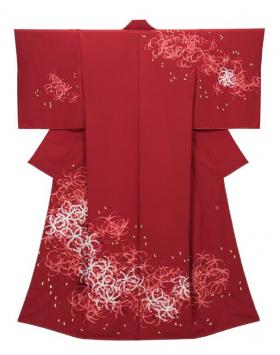
San Diego Museum of Fine Art in California presents an exhibition called Dyeing Elegance: Asian Modernism and the Art of KÅ«boku and Hisako Takaku which opened earlier this month. The artist Kuboku Takaku (1908–1993) perfected the ancient Japanese technique of wax-resist dyeing to create textile paintings on obi, kimono, and screens, merging cubist and modernist styles.  His daughter Hisako (born 1944) is now one of the last living artists who preserves the knowledge of this painstaking dyeing technique, and her obi and kimono continue to be among the most chic and sought-after throughout Japan. In this exhibition 71 obi, kimono, and other textile paintings of Kuboku and Hisako Takaku have been borrowed from museums and collectors and are on display outside of Japan for the first time.

Notice of copyright: 
All text and images on this blog are the copyright of Ingrid Mida, unless otherwise noted. The copying of posts, images and/or text without proper attribution is violation of copyright and legal action will be pursued.

Saturday, February 25, 2012

Oscar-worthy Gowns

Marchesa F/W 2012
Marchesa F/W 2012
Marchesa F/W 2012
Marchesa F/W 2012
Marchesa F/W 2012
Details of Back 
These exquisite gowns from Marchesa's recent F/W 2012 runway at New York Fashion Week embody the glamour and elegance of old-world Hollywood - making them perfect for the red carpet of the Academy Awards.

Photo credits: Vogue.com

Notice of copyright: 
All text and images on this blog are the copyright of Ingrid Mida, unless otherwise noted. The copying of posts, images and/or text without proper attribution is violation of copyright and legal action will be pursued.

Wednesday, February 22, 2012

Dare to Wear Love at the Textile Museum of Canada

Dare to Wear Love at the Textile Museum of Canada
Photo by Ingrid Mida 2012
The patterns and vibrancy of African cloth will blow away the cobwebs of the winter if you venture out to see the colourful Dare to Wear Love exhibition at the Textile Museum of Canada. This exhibition was designed to raise awareness and funds for grassroots organizations who are turning the tide of HIV/AIDS in sub-Saharan Africa and showcases the work of Canada's top fashion designers including Brian Bailey, David Dixon, Fashion Crimes, Linda Lundström, Hoax Couture, Izzy Camerilli, and others. The designers have used African cloth to create fashionable pieces that celebrate creativity and social responsibility.

Dare to Wear Love 2 at the Textile Museum of Canada
Photo by Ingrid Mida 2012
Dare to Wear Love - Child's Dress by Izzy Camerilli
Photo by Ingrid Mida 2012
This tightly curated and beautifully displayed exhibition will run until May 6, 2012.

Textile Museum of Canada
55 Centre Avenue (at Dundas Street West)
Toronto, Ontario
M5G 2H5
416-599-5321
info@textilemuseum.ca

Notice of copyright: 
All text and images on this blog are the copyright of Ingrid Mida, unless otherwise noted. The copying of posts, images and/or text without proper attribution is violation of copyright and legal action will be pursued.